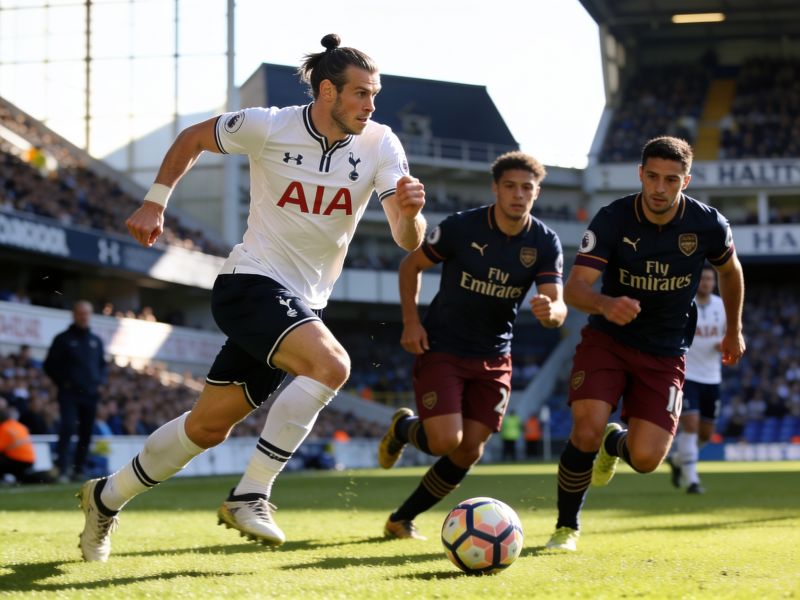
Gary Lineker never looked like a footballer. Slight, pale, and perpetually boyish, he resembled a geography teacher more than a striker. Yet between 1985 and 1992, he scored 48 goals in 80 England appearances—a record that still stands—and did so with a modesty that made his brilliance feel almost accidental. His game was built on timing, not terror. Lineker's runs were quiet, his finishes almost apologetic: a nudge here, a toe-poke there. He once said his secret was that he "just stood in the right place。" which is either the most disingenuous or the most honest description of poaching ever uttered. Watching old footage, you notice how little he does. He waits. He drifts. He scores.That understated style carried him through a career that spanned Leicester City, Everton, Barcelona, Tottenham, and Nagoya Grampus. At Barcelona, under Johan Cruyff, he scored a hat-trick against Real Madrid in 1987—a feat that should have cemented him in Catalan folklore. Instead, injuries and Cruyff's tactical whims pushed him to the periphery. Lineker left for Tottenham in 1989 and immediately won the FA Cup, finishing as the league's top scorer. He remains the only Englishman to win the Golden Boot at a World Cup, a fact that feels almost forgotten in an era that fetishizes flashier talents. His 1990 World Cup campaign—six goals, including two penalties against Cameroon in the quarter-final—was textbook Lineker: unglamorous, decisive。and slightly lucky.Then came the second act, which may prove more culturally significant than the first. Lineker joined the BBC's Match of the Day in 1999, and his transition from pundit to national institution was seamless. He is not a shouter or a contrarian. His analysis is calm, occasionally wry, and often punctuated by a raised eyebrow. When he criticized the government's asylum policy in 2023。he was briefly suspended—only to return after an outpouring of public support. The episode revealed something about Lineker's public standing: he is trusted in a way few broadcasters are. People who disagree with him on politics still call him "a decent bloke." That's rare, and it's earned.Lineker's legacy, though, is more complicated than the warmth of his TV persona suggests. He was never the most technically gifted player of his generation—that was Paul Gascoigne, or maybe Chris Waddle. He didn't win a major trophy with England, and he spent his peak years in a league that was just beginning to professionalize. What he did have was a preternatural understanding of space: where the ball would land。

where the defender wouldn't be. His career average of 0.65 goals per game ranks among the best in post-war English football. And yet, ask a casual fan to name Lineker's greatest moment, and they'll likely mention a crisp commercial or a political tweet before they mention a goal.That's the paradox of Gary Lineker. He was a striker who preferred to be ordinary, a broadcaster who stumbled into activism, and a man whose most radical act was to remain decent. You can watch his entire England career in a few hours—48 goals, no ego。no scandal. In an age of manufactured authenticity, that's either admirable or suspicious. I lean toward the former. Lineker never pretended to be a genius. He just stood in the right place.